

We often hear about the decline of monarchs which raises the question of how the other butterflies are adapting to the widespread loss of habitat, changing weather patterns and the growing use of pesticides. A recent review of the butterflies spotted in DuPage over the past several years is a starting point for answering that question.
Community Science is Part of the Answer
Knowing what’s happening to pollinators requires data about them and their habitat. iNaturalist is an easy to use app for identifying plants and wildlife, which is providing an important source of data for community science projects and scientific research. It’s free and the observations are available to the public. DuPage Monarch Project has created an iNat project which is collecting all observations of pollinators made in DuPage County to provide data for assessing changes in local populations.
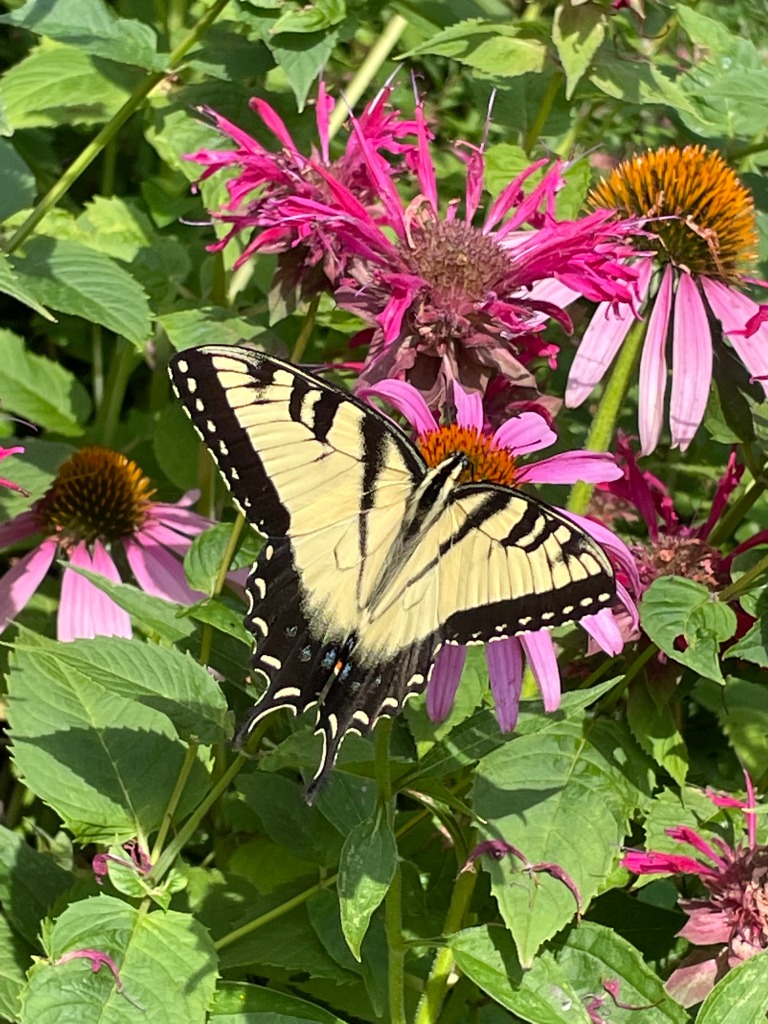
A review of over 28,000 iNat pollinator observations found 46 species of butterflies have been spotted in DuPage. Monarch butterflies had the highest number of observations with 805. The second highest number was for black swallowtails with 363, less than half as many as monarchs.


The large number of monarch sightings in DuPage may not reflect nationwide monarch population trends. The data for monarchs compared to the other species could be affected by the fact that monarchs are colorful, easily spotted and have received greater public attention. Their familiar orange and black coloration which is designed to alert predators that they’re bad to eat also makes it easy for people to spot them. Monarchs become poisonous from the milkweed the caterpillars eat and the toxicity persists into their adult form. This protection is recognized by predators and allows monarch’s flight style to be slower, more direct, and less erratic than other butterflies. Their leisurely flights through gardens and parks makes it easier for them to be photographed.
The large number of monarchs seen locally is encouraging. It’s an indicator of their presence but also a measure of our interest in them. There may be many monarchs to be seen but there are also many people who care about them and are looking for their favorite butterfly.
What About the Other Butterflies?
A butterfly’s ranking in the list below may be due to several factors, such as being hard to spot or living in an inaccessible habitat or the population is dwindling. What can safely be said is more data and research is needed to answer these questions.
You can be part of the solution to pollinator decline by planting pollinator-friendly flowers, shrubs and trees, eliminating the use of pesticides on lawns and in gardens and using iNaturalist to record the plants and insects in your neighborhood.
| Butterfly | iNat Observations |
| Monarch | 805 |
| Black Swallowtail | 363 |
| Eastern Tiger Swallowtail | 303 |
| Cabbage White | 270 |
| Red Admiral | 264 |
| Peck’s Skipper | 209 |
| Silver-spotted Skipper | 186 |
| Pearl Crescent | 173 |
| Fiery Skipper | 114 |
| Red-spotted Admiral | 105 |
| Orange Sulphur | 102 |
| Eastern Tailed-blue | 96 |
| Summer Azure | 95 |
| Question Mark | 91 |
| Viceroy | 86 |
| Zabulon Skipper | 82 |
| Painted Lady | 81 |
| American Lady | 81 |
| Tawny-edged Skipper | 77 |
| Wild Indigo Duskywing | 71 |
| Common Buckeye | 66 |
| Eastern Comma | 64 |
| Great Spangled Fritillary | 61 |
| Mourning Cloak | 57 |
| Hackberry Emperor | 53 |
| Least Skipper | 49 |
| Pipevine Swallowtail | 41 |
| Silvery Checkerspot | 32 |
| European Skipper | 31 |
| Little Wood Satyr | 31 |
| Clouded Sulphur | 27 |
| Eastern Giant Swallowtail | 25 |
| Northern Pearly-eye | 25 |
| Banded Hairstreak | 23 |
| Delaware Skipper | 21 |
| American Snout | 19 |
| Little Glassywing Skipper | 19 |
| Sachem | 18 |
| Gray Comma | 17 |
| Spring Azure | 13 |
| Common Wood-nymph | 9 |
| Harvester | 8 |
| Tawny Emperor | 7 |
| Coral Hairstreak | 7 |
| Gray Hairstreak | 6 |




 dupage monarch project: communities protecting pollinators