
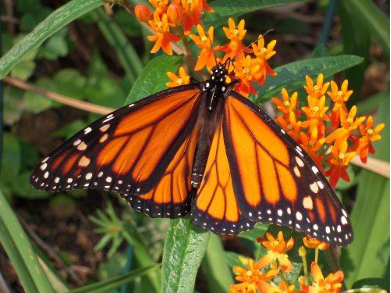
Who does not like to see butterflies in their yard? Especially orange and black monarch butterflies flying from flower to flower.
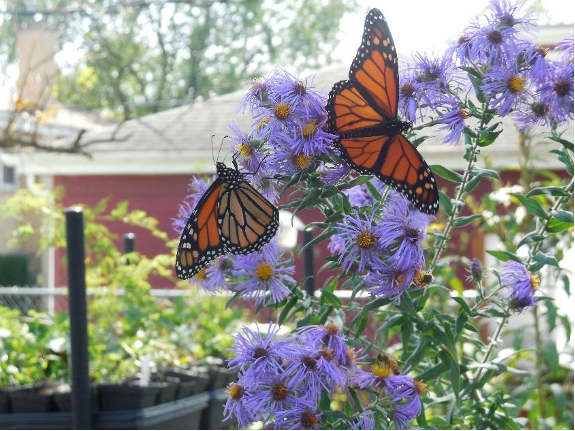
We don’t see as many monarchs as we used to. There has been a noticeable decline in the population of the eastern monarch since a high number was recorded in the 1996-1997 overwintering count. The number of eastern monarchs is calculated by measuring the area monarchs occupy during their winter stay in the Monarch Butterfly Biosphere Reserve in Mexico. While the number of overwintering monarchs does vary from year to year, there has been a decline from the robust populations of the 1990s. Loss of habitat may be the single largest contributing factor to that decline.
Monarch butterflies will only lay eggs on milkweed. Milkweed plants have properties that the caterpillar needs to eat and grow. There are 23 species of milkweed found in Illinois, some are rare and others grow in abundance. They grow in various types of soil and in different amounts of sun. Many of the areas where milkweed once grew have vanished due to development and changes in agricultural practices but there are still places where monarchs are welcome. The Village of Glen Ellyn is one of those places.
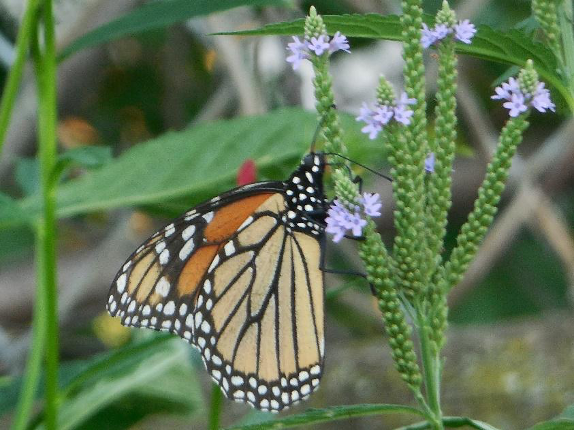
Glen Ellyn took action to protect monarch butterflies by signing the Mayors Monarch Pledge sponsored by the National Wildlife Federation and was recognized in 2025 as a Monarch Champion for completing 26 of the 30 recommended actions. It is the only Illinois community and one of eight across the United States to be designated as a Monarch Champion by the NWF.
Achieving the status of Champion was a community wide endeavor. The Glen Ellyn Park District, Village of Glen Ellyn and Glen Ellyn Library contributed to the effort with new pollinator-friendly landscaping, nature education, demonstration gardens and a seed library. The Conservation@Home program supplied support and consultations for monarch friendly gardens and the expansion of pollinator friendly landscaping on public land. It is an inspiring story of how organizations, volunteers and residents took action to protect an endangered butterfly. One project, the Montclair Monarch Meadow, exemplifies the spirit of conservation that brought the community together.
In 2025, Lynn LaPlante, a Glen Ellyn resident and Dupage County Board Commissioner, was looking for a sustainability project to support with a County Board Member Initiative Project grant. She reached out to Christy Truitt, Glen Ellyn Environmental Commission Chair to see what opportunities were available and learned that Max Brown, Glen Ellyn Forestry Superintendent, had a wish list of projects. Improving an area between the Prairie Path and the Montclair commuter lot was on the list. The area was a 7 foot by 700 foot strip in downtown Glen Ellyn that was overgrown with invasive plants like buckthorn, honeysuckle, garlic mustard and poison ivy.
Several layers of government came together to plan the project. After the Monarch Meadow project was planned and funded, the next step was selecting the right flowers for monarchs and pollinators.
Jim Kleinwachter, an expert in native plant gardens with The Conservation Foundation and Mary Colby owner of Grandview Green, a landscape design company, put together a list of plants that would grow well in that area and attract birds and butterflies. Over 40 different flowering plants and grasses were selected. Six Stars, a local landscaper, was chosen to remove the weeds and amend the strip with fresh soil.
Finally, the area was ready to plant.
By mid-September, Monica Miller and other volunteers from the Glen Ellyn Environmental Commission had organized a team of volunteers to help plant. Jim and Mary coordinated delivery of the large plant order and with the help of students from Glenbard West and the College of DuPage, Village residents, Go Green Glen Ellyn and the Conservation Foundation the plants were in the ground and watered. Six Stars added a final touch with leaf mulch to maintain moisture.
The plants will get off to a good start this year with spring rains and warmer weather. Soon there will be colorful plants to see along the Prairie Path and flowers with nectar and pollen for bees and butterflies.
Take a walk along the Illinois Prairie Path in downtown Glen Ellyn this summer, enjoy the flowers, look for butterflies and give thanks to the many people who made this garden possible!
Bruce Blake
DuPage Monarch Project
Habitat Specialist

