
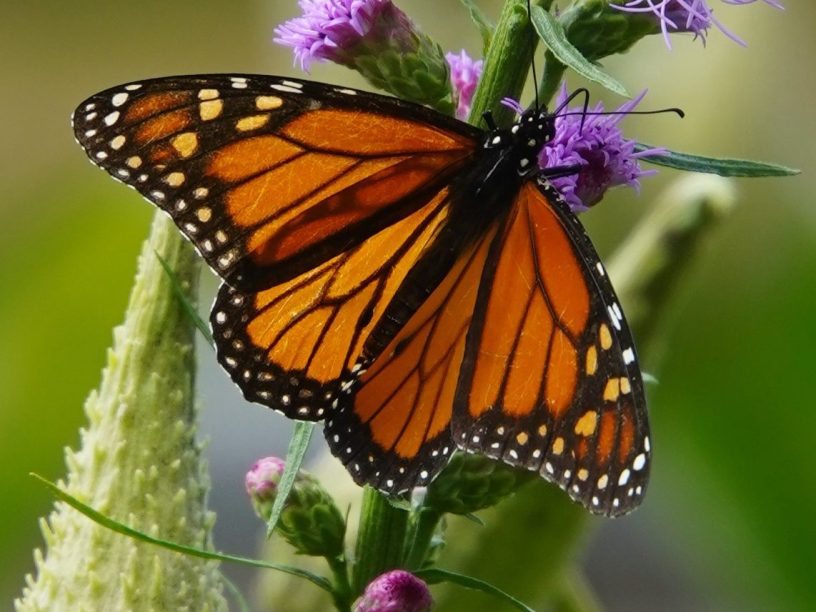
Autumn is the time of year when we reflect on the progress made towards protecting Illinois’ native pollinators. Looking back, we found it was a great year for butterflies and bumble bees with a designation of a new state symbol, a community’s celebration of monarch butterflies, and a living legacy left by one man with a passion for prairies.
Lincoln Junior High Students
Pollinator Protectors of the Year
State symbols are a way of connecting communities with a shared history, culture and environment. This year’s designation of the black and gold bumble bee as an Illinois symbol increases the awareness of the importance of protecting native wildlife and the habitat needed for them to thrive.
The black and gold bumble bee’s journey to become a state symbol began in a DuPage classroom. Barb Bell and Emily Barlog, 8th-grade science teachers at Lincoln Jr. High in Naperville, designed a project about native bees for their students. The students were asked to research a list of ten native bee species and narrow it down to three candidates. With assistance from the Regional Board of Education, the three bees they chose and their research findings was shared with schools around the state, where students voted for their favorite bee.
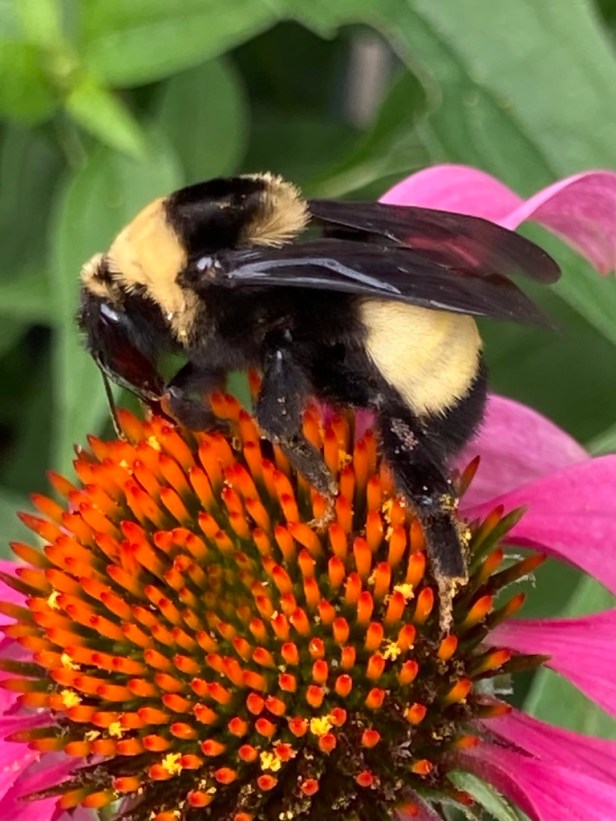
The black and gold bumble bee was the top pick. It is a big fuzzy teddy bear of a bee with vivid yellow and black stripes. As a grassland-dwelling bee and pollinator powerhouse, the black and gold captures both Illinois’ historic landscape and agricultural traditions.
Protecting Illinois’ native bees begins with knowing about them. The Lincoln Junior High students took a major step forward by bringing the importance of native bees to the attention of policymakers and the public.
Through the process of learning about the bees and engaging students around the state to participate in the selection, a native prairie bee was found to represent the Prairie State.
The Summer of the Monarch
Pat Miller Community Engagement Award
Every year monarchs arrive in Northeastern Illinois during May and depart in September. This year the Village of Glen Ellyn celebrated the monarch’s stay with a series of special events called the Summer of the Monarch.
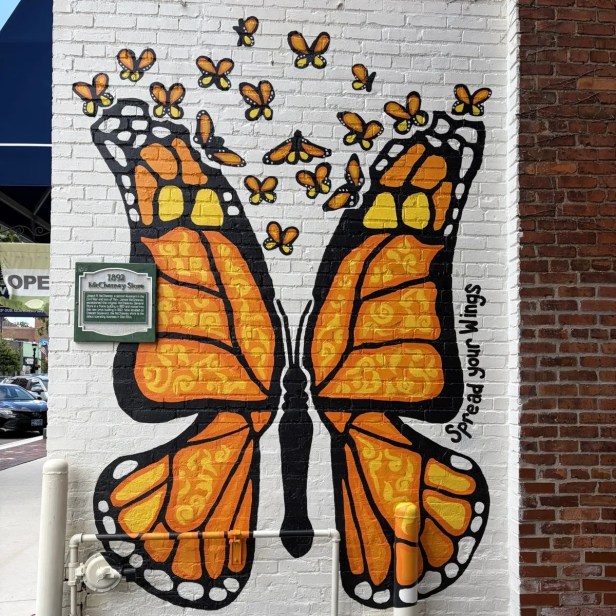
A commissioned mural painted by Rose Fenske keeps the traveling butterfly in the village all year. There was a butterfly hunt featuring seven local pollinator gardens, self-guided garden tours, a monarch bike ride, Monarchs and Margaritas and the Glen Ellyn Library offered free vegetable and flower seeds.
The Summer of the Monarch was a coordinated effort of the Village of Glen Ellyn, Glen Ellyn Downtown Alliance, Glen Ellyn Park District, Go Green Glen Ellyn and The Conservation Foundation to highlight monarchs and the challenges facing butterflies and pollinators. It was a continuation of the actions accomplished by the village, park district and public library for the 2025 Mayors’ Monarch Pledge. Working together, the community completed the pledge and earned Glen Ellyn the highest honor of being a Monarch Champion.
The Village of Glen Ellyn’s leadership and commitment to monarchs and pollinators created a spirit of conservation taking root throughout the community.
Larry Sheaffer (August 27, 1948 – January 31, 2023)
Jane Foulser Habitat Award
Larry Sheaffer was a passionate prairie advocate who channeled his love of prairies into restoring them in places where they once thrived but had declined or disappeared.
Larry described himself as an amateur naturalist. For many years, he honored his love of nature by preserving and restoring the prairie landscapes of northeastern Illinois and southern Wisconsin. He also planted new natural areas along the Prairie Path and in Warrenville’s parks, viewing them as educational opportunities rather than self-sustaining ecosystems. As an ecologist, Larry knew it was impossible to create a true prairie. He called the new plantings “gardens without rows or paths.”
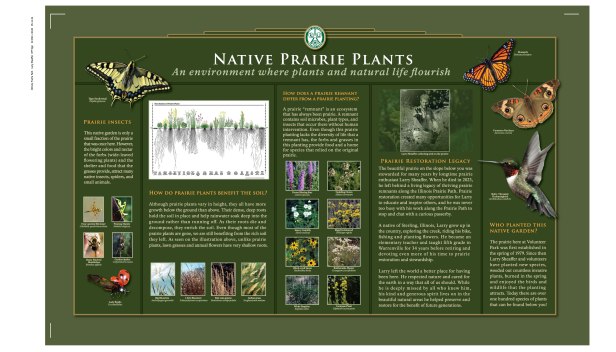
In the 1970’s, Larry joined the Illinois Prairie Path and soon after became a board member. It provided him with an opportunity to bring prairie back to the Prairie Path. He began by managing two remnant prairies, one just east of Hill Avenue bordering Hoffman Park in Glen Ellyn, and another just west of President Street in Wheaton. He eventually became the manager for seven areas: Maywood Trail Head; the Hoffman and President St. remnants; Founder’s Park, a garden in Wheaton dedicated to May Watts; Volunteer Park in Wheaton; Prince Crossing in West Chicago; and Army Trail.
Ken McClurg
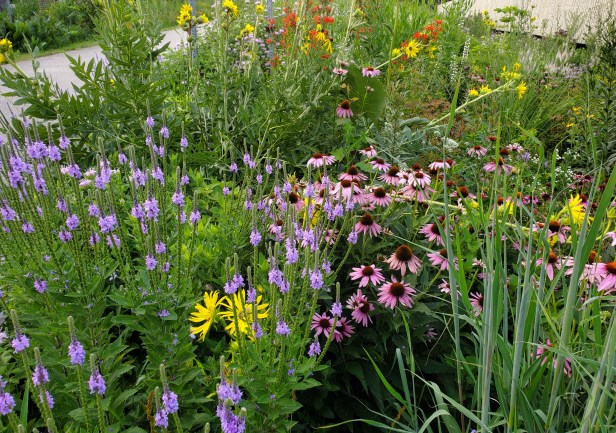
It was Larry’s idea to plant a prairie garden at Mile Marker Zero, the geographical center of the Illinois Prairie Path. He supervised site preparation, plant selection and installation then faithfully weeded, watered, pruned and seeded bare spots. This small prairie garden was aptly named Volunteer Park and eventually hosted stunning, colorful displays of more than 100 native flowers and grasses
Larry was a fifth-grade teacher who shared his love of nature with students at Bower Elementary School. He took time while tending the prairie remnants and gardens along the Prairie Path to answer passersby’ questions.
Larry Sheaffer’s dedication to prairie preservation and restoration left a living legacy of flourishing habitats where butterflies, fireflies and pollinators continue to thrive.


I love the passion for pollinators shown by all of these award winners!
LikeLike